





▶ Minimum Grid
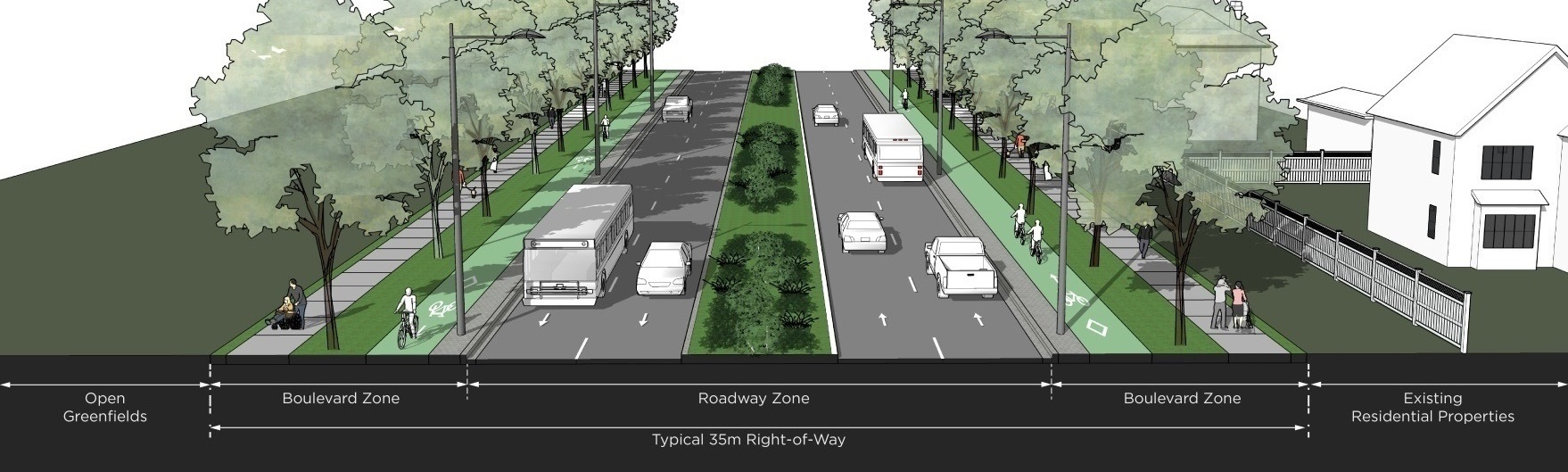
The minimum grid concept is to quick-build missing cycling connections in 3-5 years (some cities have been more ambitious) to achieve a continuous network of safe cycling facilities which may include separated/protected bike lanes, boulevard trails, quiet neighbourhood routes and even park trail connections, in order to reliably serve major destinations and connect neighbourhoods across the City. Predictability is a key benefit; with a well-defined minimum grid, wayfinding can be logical and intuitive. ▶ See also: Cycling and Transit; CMP Updates ▶ See also from: Wayfinding
Will Mississauga create a Minimum Grid?
[Posted: October 4, 2025]In Mississauga, the approach has been to make long-term master plans (2010; 2018) for a connected cycling network, and install sections of cycling infrastructure piecemeal, based on opportunity e.g. road resurfacing, directed funding, or in reaction to a serious safety incident. But isolated projects do little to increase overall cycling in the City, and the "ideal network" is always years away. With the 2025 Cycling Master Plan Update underway, it appears the concept is taking hold, with a stated goal of a rapid (5 year) Minimum Grid build of a safe and connected network.
With over sixty (60) Major Transit Station Areas (MTSAs) in Mississauga, the challenge will be to complete the first/last kilometer connections in order to make cycling a practical choice for commuters. NOTE: The MiWay Five Plus Master Plan (2026-2035) includes: "Address first-mile & last-mile connectivity challenges to improve overall access to transit."
Barriers & Gaps
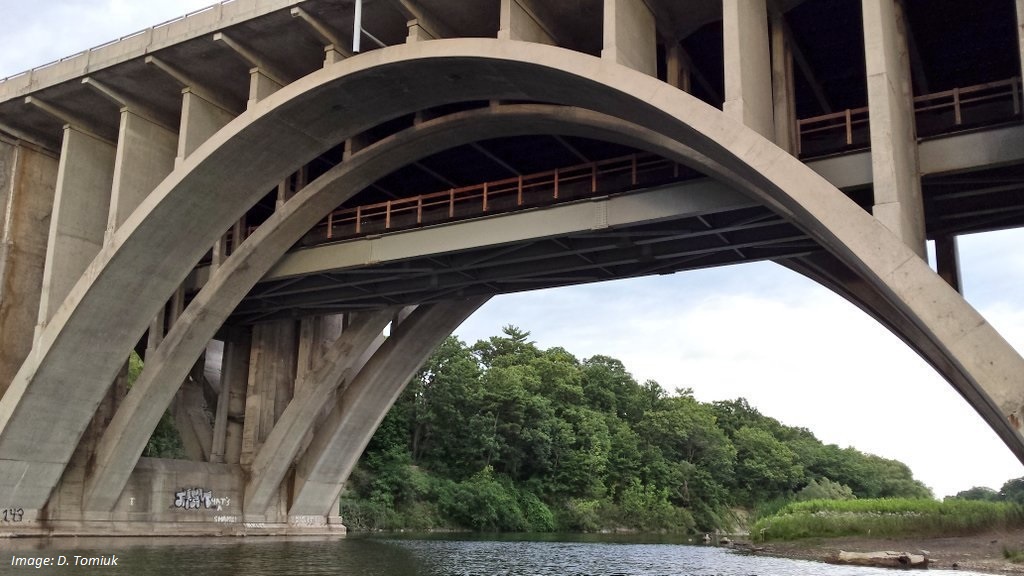
[Posted: January 4, 2022]Mississauga is a city of significant barriers, the legacy of being planned and designed around cars. It is the only city in the Greater Toronto Area (GTA) segmented by seven (7) major highways (p1 of 6p PDF). In addition there are wide and fast arterials, railway lines, and the Credit River and myriad creeks and streams which are barriers. Active Transportation retrofits, e.g. pedestrian/cycling Bridges & Underpasses are needed to (re)connect the City's historic communities and meet the City's ambitious targets for 50% sustainable mode share for pedestrians, cyclists, and transit-users by 2041. Meanwhile, whole neighbourhoods are isolated unless the residents drive.
▶ Topical MCN! X Posts:
CITY OF BARRIERS: Mississauga was designed around cars. Segmented by 7(!) major highways; rail lines; fast, wide arterials; #CreditRiver and streams... neighbourhoods are isolated w/o safe connected #cycling network to go over, under or thru! #bikeMississauga 🚲 #MinimumGrid 🛣 https://t.co/tv9NHS0FwT pic.twitter.com/S4CiaF0ktz
— Mississauga Cycling Now! (@MissCyclingNow) January 4, 2022
MISSISSAUGA'S NEXT 50 YEARS: Did you hear @BrentToderian at LAC (Jan 17) about creating livable, sustainable cities? Hey! #Cycling is 🔑 to the strategy for positive change, incl 3-year build of #MinimumGrid of *protected* #BikeLanes in #bikeMississauga 🚲 https://t.co/I96wNN12O7
— Mississauga Cycling Now! (@MissCyclingNow) January 23, 2024
⬆️ HIGHWAYS LIMIT OPTIONS... for efficient intra-city transit and a safe, connected #cycling network; requiring costly retrofit infrastructure to address climate change, boost local business and create a healthy liveable city! #bikeMississauga 🚲 Stats 🔗: https://t.co/Y64ymLntGj pic.twitter.com/LKNgPJrQK3
— Mississauga Cycling Now! (@MissCyclingNow) July 28, 2022
Copyright © 2025 MCN! - Mississauga Cycling Now! All Rights Reserved.